Women's health is far more complex than a simple look at hormone levels. It is a dynamic interplay of hormones, nutrition, genetics, metabolism, and lifestyle - each shaping how the body feels and functions.
Hormones are a key influence on mood, energy, and cycles, but they don't act alone. Nutritional needs shift throughout life stages, genetics determine unique predispositions, and how the body metabolizes hormones can determine disease risk.
The report synthesizes these findings into clear clinical priorities and practical next steps, so you can move from complex symptoms to a confident, individualized plan with less guesswork and fewer follow-up tests.
Free Webinar
Hormones, Stress, Nutrition, Detox: Women’s Health+ in Practice
Personalized care for women requires a 360° view. In this practical, case-driven webinar, we'll show you how to use Genova’s new Women’s Health+ profile to connect hormones, stress response, nutrient status, and detox capacity into one clear clinical picture so you can treat with precision and confidenc.
Why Practitioners Choose Women's Health+
Truly integrative scope in one report.
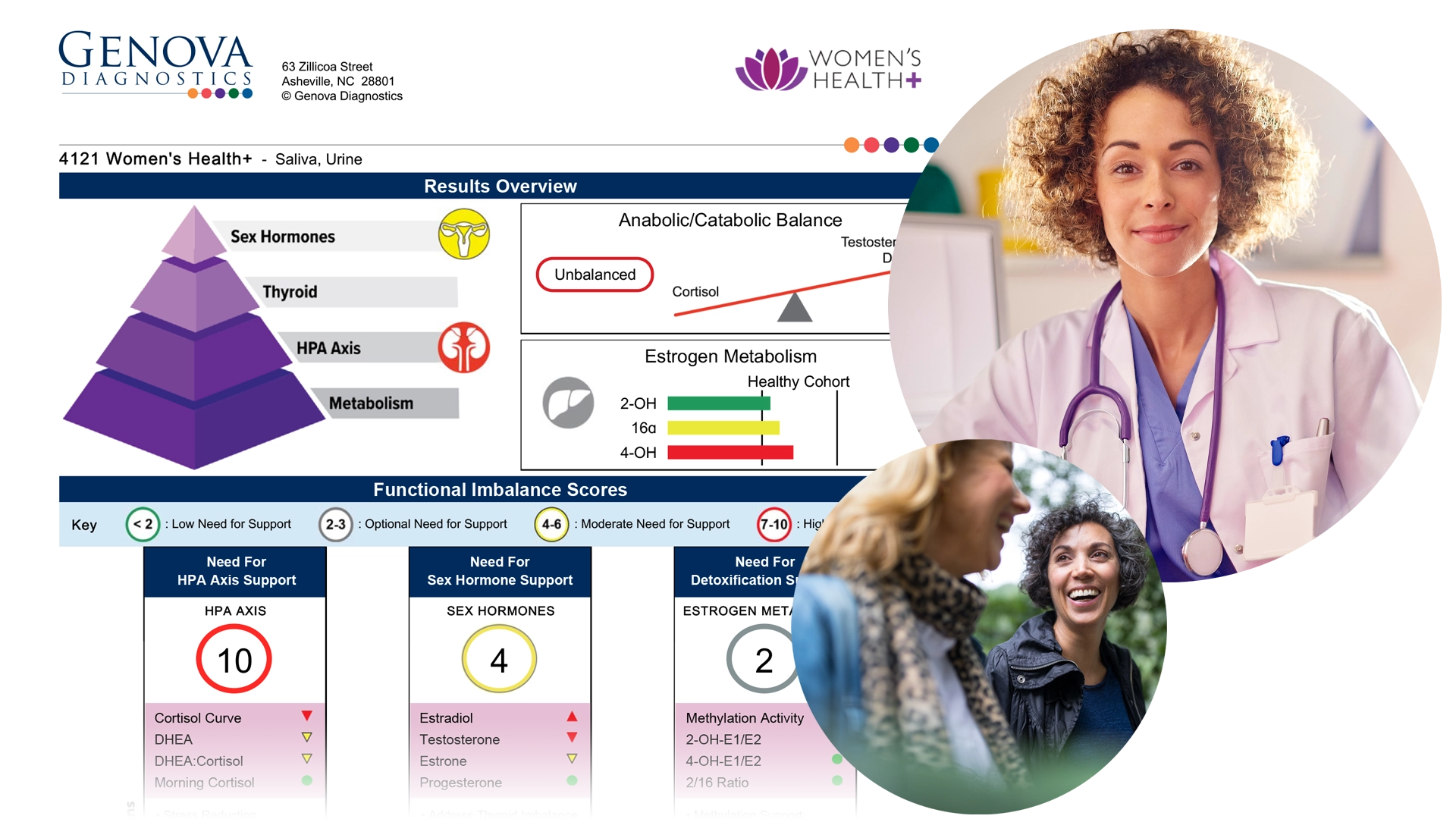
Women's Health+ measures salivary sex hormones, the full diurnal cortisol rhythm, urinary estrogen metabolites, and urinary organic acids that flag vitamin and cofactor insufficiencies. Optional genetic add-ons (COMT, MTHFR, CYP1A1, CYP1B1, ApoE) help you tailor detoxification and methylation support.
Actionable summary, not data overload.
The report surfaces functional imbalance scores for HPA axis, sex hormones, and estrogen metabolism with targeted clinical support suggestions, so you can move straight to an initial plan.
Nutrition insights you can use on day one.
The Nutrient Need Overview maps organic-acid patterns to practical B-vitamin, mineral, antioxidant, probiotic, and GI support recommendations. This bridges hormone care with mitochondrial, methylation, and gut support in a single readout.
Simple, at-home collection.
Saliva and urine, with an optional buccal swab. No phlebotomy required.
What Women's Health+ Measures
- Salivary sex hormones: estradiol, estrone, progesterone, testosterone, DHEA, with an anabolic/catabolic snapshot.
- Diurnal HPA-axis rhythm: waking through evening cortisol with a need-for-support score.
- Urinary estrogen metabolism: pathway balance across 2-OH, 4-OH, and 16-OH estrogen metabolites plus methylation activity and 2:16 ratio to contextualize risk and guide clearance support.
- Urinary organic acids: functional markers tied to antioxidants, B-vitamins, mitochondrial function, methylation, dysbiosis, and detox needs, rolled into nutrient recommendations.
- Optional SNPs: COMT, MTHFR, CYP1A1, CYP1B1, ApoE to personalize methylation and phase I/II detox strategies.
How Results Inform Treatment
The Women's Health+ report links each imbalance to evidence-informed levers you can pull immediately, such as stress-reduction tactics, adaptogens, food intake, methylation cofactors, and phytoestrogen or phytoandrogen support. You also get practical nutrient dosing suggestions derived from organic-acid patterns.
Examples of Report-to-plan Translation
HPA Axis
A flattened morning peak with high "Need for HPA Axis Support" prompts sleep, glycemic, and adaptogen strategies while you address underlying stressors and evaluate blood sugar stability.
Estrogen Metabolism
Low 2-OH with elevated 4-OH and suboptimal methylation activity points to increasing crucifers/DIM/I3C, supporting B-vitamins and magnesium, and reinforcing antioxidant capacity.
B-vitamin insufficiency
Reported need for B2/B6/folate/B12 guide targeted repletion to support neurotransmitters, energy production, and methylation linked to hormone balance.
Genetics
COMT V158M or CYP1B1 variants nudge you toward thoughtful catechol and estrogen-quinone management with methyl donors and antioxidant protection, while CYP1A1 results inform cruciferous and lifestyle detox emphasis.
How does Women's Health+ compare to dried-urine hormone panels?
If you already use dried urine panels, Women's Health+ will feel familiar on estrogen metabolites, but it goes wider where it matters clinically:
- Using saliva for real-time diurnal cortisol rhythm and bioactive sex steroids, plus urine for metabolites and organic acids shows the full story. You see production, metabolism, and cofactor sufficiency together.
- Nutrition is built in with an organic acid assessment that shows nutrient needs allowing for dosing suggestions to be embedded in the report. You do not need a second test to address B-vitamin, mitochondrial, or antioxidant gaps that often block progress.
- Genetic context is there when you need it. Optional COMT/MTHFR/CYP1A1/CYP1B1/ApoE add-ons help you tailor methylation and detox plans for patients with stubborn symptoms or family risk.
The bottom line is Women's Health+ is designed to convert complex symptom clusters into an integrated plan with fewer add-on tests and fewer visits spent "connecting the dots."
Discover the Full Story of Your Hormonal Health with Endo+
Unlike other tests, Endo+ offers a comprehensive view of your hormonal health. By evaluating a broad spectrum of hormones - including those related to male and female hormones, thyroid function, stress response (adrenal hormones), sleep cycles (melatonin), and how your body processes estrogen - Endo+ offers insights that go beyond the basics. This is particularly vital for understanding your risk of hormone-related cancers.
If you're dealing with any of these common symptoms, Endo+ may shed light on underlying hormone imbalances:
| Fatigue or an unexpected change in energy levels |
Hot flashes and night sweats |
Difficulty concentrating or "brain fog" |
| Weight changes |
Changes in hair and skin |
Decreased muscle mass/strength |
| Irregular mentrual cycles |
Frequently feeling cold |
Concerns about bone density, such as osteoporosis |
| Changes in libido |
Bowel changes |
Heart disease |
| Cardiovascular health concerns, including heart palpitations |
Mood fluctuations, including feelings of depression or anxiety |
Sleep disturbances |
Knowing your hormone levels and their interrelationships can lead to effective treatment options. These can range from dietary adjustments and lifestyle changes to hormone replacement therapy, all aimed at restoring your hormonal harmony.
Patients are often surprised at how easy it is to improve their symptoms and how great they feel once their hormones are back in balance.
Endo+ assessess a combination of blood, urine, and/or saliva samples, which Genova will specify based on your doctor's order.
We're here to support you throughout the process. For detailed instructions and information on how to prepare for your test, please review the Test Preparation and Support Materials tabs.
Preparing for this Test
Test prep and clinical considerations for cortisol, DHEA, glucocorticoids, and altered sleep-wake schedules are available here.
Medication and Supplement Impact FAQs
Should a patient discontinue a medication or supplement prior to testing?
Genova never recommends that patients discontinue medically necessary medications or supplements in order to complete testing.
There may be times when a patient may stay on a medication or dietary supplement during testing in order to evaluate its effectiveness, especially if a long-term medication. Discontinuing a substance is intended to establish a baseline finding. If you choose to discontinue a medication, a good rule of thumb is to take the biological half-life of the drug times 5 to allow for 'clearance' before testing. With certain medications, the drug itself may have cleared the body, but the effect of the medication may be longer lasting.
How will a medication or supplement impact hormone levels?
In many instances, it is unknown what potential impact a medication or supplement may have on test results.
Any questions regarding a medication or supplement impact on biomarker results can be researched by contacting the manufacturer, pharmacist, and/or searching the literature (PubMed, Google Scholar) for relevant information. Drug databases such as drugs.com, rxlist.com, Epocrates, and pdr.net, or laboratory textbooks such as Fischbach's A Manual of Laboratory and Diagnostic Tests may provide additional information.
What are some known medication interferents?
The medications listed below are direct interferants to hormone assays resulting in falsely low or falsely elevated findings. Testing may not be appropriate for patients who cannot discontinue these medications.
| Interfering Medications/ Supplements |
Possible Impact on Results |
| Biotin - high dose (RDI is 30 mcg) |
Direct assay interferant for Thyroglobulin Antibody, free T3, free T4, serum DHEA-S, and SHBG.41
May result in falsely elevated FT3 and FT4 and falsely low levels of TSH.
The American Thyroid Association recommends holding for at least 2 days prior to testing.42
|
| Immunotherapy (i.e., cancer, autoimmune, and other condition treatments) |
Immunotherapy or diagnostic procedures utilizing immunoglobulins or immunoglobulin fragments may produce antibodies that interfere with immunoassays. Such interfering antibodies may cause erroneous results.1
For additional information, visit the section on 'Immunoassay Interferents' below.
|
| Steroids |
Different steroids have differing effects on hormone levels, with some being direct assay interferents.2,3 See Adrenocortex Stress Profile test preparation for more info.
|
| Fulvestrant |
Estrogen receptor antagonist and SERM for advanced breast cancer treatment. Can result in false increases in serum estradiol immunoassay levels.43,44 |
Immunoassay Interferents
For all assays utilizing antibodies (i.e., immunoassays), the possibility exists for interference by heterophile antibodies in the patient sample. Patients who have regularly been exposed to animals or have received immunotherapy or diagnostic procedures utilizing immunoglobulins or immunoglobulin fragments may produce antibodies, e.g. HAMA, that interfere with immunoassays. Such interfering antibodies may cause erroneous results. Additionally, rheumatoid factor, endogenous alkaline phosphatase, fibrin and proteins capable of binding to alkaline phosphatase can act as interferants.1 The following article thoroughly discusses hormone immunoassay interference: https://www.ncbi.nlm.nih.gov/pmc/articles/PMC8368230/
- Profiles using immunoassays include:
- Salivary hormones E1, E2, E3, P, T, cortisol, DHEA, melatonin
- Serum hormones E1, E2, E3, P, T, DHEAs, SHBG
- Thyroid Panel
Medications that May Influence Results
The medications listed below will not interfere with Genova's ability to run the assays but may influence biomarker levels.
| Influencing Medications/ Supplements |
Possible Impact on Results |
| Valproic acid |
Direct assay interferent for organic acid xanthurenic acid |
| Acetaminophen |
Direct assay interferent for multiple organic acids |
| Berberine HCl |
Direct assay interferent for organic acids IAA and 5-HIAA |
| Antibiotics, antifungals, probiotics, digestive enzymes, acid blocking medications |
May indirectly influence urinary organic acid markers of malabsorption/dysbiosis |
| Amphetamines, centrally acting medications, antidepressants, Anti-Parkinsonian medications |
May influence urinary organic acid markers of neurotransmitter metabolism1,2 |
| HMG-CoA-reductase inhibitors (statins) and red yeast rice |
May indirectly increase urinary organic acid B-methylglutaric acid levels |
| N-Acetyl Cysteine (NAC) |
Direct assay interferent for cholesterol and triglycerides add-on tests; may lead to falsely low results |
| Oral contraceptives, estrogen therapy |
May increase the organic acid quinolinic acid excretion both from altered tryptophan metabolism directly, as well as the indirect functional vitamin B6 insufficiency3 |
| Quercetin |
May elevate the organic acid homovanillic acid4 |
| Steroids |
May lower inflammatory neurotransmitter metabolite quinolinic acid, an organic acid |
| Diuretics |
May impact creatinine concentration, thus affecting all urinary biomarker measurements |
| Fibrates |
In some animal studies, fibrates impact cellular energy metabolites on the organic acids profile |
| Kreb's cycle and amino chelated supplements (i.e. citrate, malate, succinate, glycinate, threonate, and orotate forms of supplements [magnesium citrate], alpha ketoglutarate, and others) |
May result in elevations of corresponding Kreb's cycle markers and amino acids |
| Vitamin C |
May increase urinary excretion of organic acid oxalic acid or lead |
| Ketoconazole, antibiotics, cimetidine, fibrates (gemfibrozil), metformin, statins, antiepileptics, digoxin |
These are examples of medications that are generally prescribed for non-hormone related conditions that can alter hormone levels and/or metabolism.2-19 This list is not exhaustive.
There is no recommendation to discontinue.
|
| Leuprolide, clomiphene, aromatase inhibitors (Anastrozole, Letroxole, Exemestane), tamoxifen, finasteride, spironolactone |
These are examples of medications that are generally prescribed to intentionally alter hormone levels and/or metabolism.2,3,17,20-28 This list is not exhaustive.
There is no recommendation to discontinue.
|
| Hormone Replacement Therapy (HRT) |
Genova's assays detect bio-identical hormones, but not synthetic or non-bioidentical hormones. Synthetic hormones, such as those from oral contraceptives, are generally not recommended for any of Genova's sex steroid hormone testing platforms - blood, urine, or saliva. Synthetic hormones may create unpredictable results that often do not reflect the patient's physiologic levels.
For additional information, visit the section on 'Hormone Therapy and Test Considerations' below.
|
| Numerous medications & factors |
Many medications and factors influence thyroid hormone results. A very informative article covering this topic can be found by following the link: https://www.ncbi.nlm.nih.gov/books/NBK285560/ |
Dietary Factors
| Dietary Factor |
Possible Impact on Results |
| Eat your usual diet; avoid over-consuming any single food, extreme diets, or engaging in a rigourous activity (i.e. marathon) |
Extreme diets and activity may impact certain organic acid biomarkers related to the citric acid cycle, neurotransmitter metabolites, dysbiosis markers, or amino acids |
| Phenol and flavonoid containing compounds in fruits, vegetables, chocolate, and tea can result in elevation of certain bacterial and fungal dysiosis markers on the organic acids profile |
| Bananas, pineapple, kiwi, plums, avacado, walnuts, and pecans can result in an elevation of the serotonin metabolite 5-HIAA measured on the organic acids profile |
| Six 8-ounce glasses of fluid |
Creatinine concentration is influenced by fluid intake |
| Fasting, water allowed only |
Reference ranges were set based on an overnight-fasted population. Overnight fasting minimizes influence of a single meal and provides a "steady diet" sample |
Hormone Therapy and Testing Consideration FAQs
When should my patient take their hormones prior to testing?
The answer depends on several factors including the hormone delivery type, dosing intervals, specimen type, what information the clinician is hoping to glean, etc. In general, many clinicians opt to test their patients 8-12 hours following their last dose of hormones. Some clinicians wait 24 hours following transdermal cream application.
Published standardized guidelines and best practices are lacking regarding timing of supplementation with testing. The time to reach peak and trough levels, as well as time to steady state varies with each hormone and hormone delivery method. Furthermore, peak and trough levels may vary depending on the sample type evaluated (saliva, blood, urine). Pharmacokinetic studies exist for FDA-approved hormone products and provide information about half-life and time to steady state. The same kinds of studies do not exist for custom compounded hormones, making it challenging to know the best time to test. Most of the published literature utilizes serum to conduct the pharmacokinetic studies; information on half-life and timing of saliva or urine sampling is sparse. Some sources suggest that measuring the trough level is ideal.
Can custom compounded bioidentical hormones be monitored with testing?
Many clinicians prefer to monitor patients on custom compounded formulas so they can adjust accordingly. Hormone compounding can result in variations depending on the base ingredients as well as actual dose of the active hormone. Genova has observed erroneously elevated levels of hormones in patients particularly being prescribed custom compounded formulations. These erroneous levels are not typically observed in baseline, unsupplemented samples. It is important to work closely with your compounding pharmacist to understand the formulations, pharmacokinetics, and pharmacodynamics. Pharmacokinetic studies exist for FDA-approved bioidentical hormones and provide information about half-life and time to steady state. These studies are sparse for custom compounded hormones. Blending more than one hormone in a regimen is another variable that affects the drug's kinetics, potentially resulting in unpredictable findings.
What impact does hormone cream have on testing?
Hormone creams tend to be underrepresented in serum and overrepresented in salivary samples. Progesterone is very lipophilic and accumulates in subcutaneous fat cells. Red blood cells passing through the capillaries play a role in transporting progesterone to salivary glands and other tissues.29 As such, we can see elevated progesterone in salivary samples for several months after complete cessation of transdermal therapy, before the progesterone depot is depleted. The degree of impact that transdermal hormone therapies may have on an individual's salivary hormone levels are determined by many factors: dose, route of administration, site of administration, pharmacokinetics of the preparation, patient compliance, adiposity, and patient metabolic individuality. Anecdotally, we have noticed salivary progesterone levels persisting for up to a year after discontinuation of transdermal creams in some patients.
Additionally, creams can directly contaminate samples. For example, a vaginal hormone cream can contaminate a urine sample. Residual cream on the fingers after application can contaminate tube caps, lips, or mouth before spitting into a tube. Sublingual hormones can directly contaminate salivary collections if they haven't been fully absorbed.
Can a patient test while taking synthetic, non-bioidentical hormones?
Synthetic hormones, such as those from oral contraceptives, are generally not recommended for any of Genova's sex steroid hormone testing platforms - blood, urine, or saliva. The assays are not designed to detect the molecular structure of synthetic hormones, only bio-identical and endogenously produced hormones. Synthetic hormones may create unpredictable results that often do not reflect the patient's physiologic levels. Hormone therapy impacts the hypothalamic-pituitary-gonadal axis via negative feedback as well as affecting binding protein levels, which then results in altered levels of endogenous hormones.30 Testing while on synthetic, non-bioidentical hormones may produce results that are not clinically useful.
How long after discontinuing oral contraceptives can a patient test hormone levels?
Prior to testing, it is preferred that there be at least two menstrual bleeds after discontinuing contraception (i.e., oral contraceptive pill, depo-medroxy-progesterone acetate, hormonal IUD like Mirena or Kyleena, etc.).31-33 Testing sooner may not assess the natural baseline menstrual cycle as the body needs time to readjust. Recent discontinuation of oral contraceptives may delay ovulation and prolong the follicular phase and thus overall cycle length.31 The overall duration of contraceptive use does not significantly affect the return of fertility after discontinuation.34
Unintentional hormone exposure can elevate levels
Patients should be instructed to avoid skin-to-skin exposure with close friends/family members that use hormone creams to avoid unintentional exposure. Exposure can be from close contact with others using prescription or over the counter transdermals including family members or occupational (i.e., massage therapy, pharmacies, health care facilities), and exposure to items that a person using transdermals touched including gym equipment, towels, doorknobs, sheets, etc.35,36 Anti-aging, anti-wrinkle creams, and other cosmetics and body care products may contain hormones even if not disclosed on the label. Additionally, over-the-counter products containing hormones can be purchased directly by consumers.37,38
Bleeding Gums and Salivary Testing
Salivary samples visibly contaminated with blood should be recollected. This can result in a false elevation of hormones. Blood concentrations of steroid hormones are several-fold higher than saliva levels.39,40 For this reason, brushing and flossing is discouraged for 1 hour prior to salivary collection. Additionally, if the patient has a condition that causes gums to bleed easily, such as gingivitis or periodontitis, or has dentures and other oral appliances, a plan should be in place to ensure gums do not bleed during testing.
Urinary Creatinine Levels, Kidney Function, Blood in Urine (Hematuria)
All urine hormone results are ratioed to urinary creatinine. If urinary creatinine is out of range, it can impact the levels of reported urine analytes. Several medications influence creatinine concentration. The collection instructions recommend not to drink more than six, 8-ounce glasses of liquid (48 ounces) 24 hours prior to sample collection because it can dilute the urine impacting the reported urine analytes. Below are considerations for altered urinary creatinine:
- Elevated Creatinine: High muscle mass, heavy exercise or increased physical activity, increased protein intake, significant dehydration, and increased renal clearance.
- Low Creatinine: Poor renal clearance or dysfunction, low muscle mass (i.e. physical inactivity or muscle wasting disease), diluted urine (use of diuretics), malnutrition/protein insufficiency, and hypothyroidism.
We do not recommend urine hormone testing in a patient with known kidney dysfunction, defined by abnormal serum testing.
Do not collect if there is blood in urine, including menstrual or other blood. Blood contains hormones, which can falsely elevate urinary hormone results.
Pediatric Patients
The reference ranges for all of Genova's endocrine profiles are based off a healthy cohort of patients aged greater than 18. Genova does not have pediatric reference ranges. A literature search may provide further insight into pediatric reference ranges.
REFERENCES
- Instructions for Use Beckman Coulter Access Immunoassay Systems;2020.
- Fishbach F. A Manual of Laboratory and Diagnostic Tests. 11th ed: Wolters Kluwer; 2022.
- Sarne D. Effects of the Environment, Chemicals and Drugs on Thyroid Function. In: Feingold KR, Anawalt B, Boyce A, et al., eds. Endotext. South Dartmouth (MA): MDText.com, Inc; 2000.
- Castinetti F, Guignat L, Giraud P, et al. Ketoconazole in Cushing's disease: is it worth a try? J Clin Endocrinol Metab. 2014;99(5):1623-1630.
- Pont A, Williams PL, Azhar S, et al. Ketoconazole blocks testosterone synthesis. Arch Int Med. 1982;142(12):2137-2140.
- Medda F, Puligheddu P, Parodo G, et al. Short term treatment with ketoconazole: effects on gonadal and adrenal steroidogenesis in women. Clin Exp Obst Gynecol. 1987;14(3-4):161-166.
- Trachtenberg J, Zadra J. Steroid synthesis inhibition by ketoconazole: sites of action. Clin Invest Med. 1988;11(1):1-5.
- Adlercreutz H, Pulkkinen MO, Hämäläinen EK, Korpela JT. Studies on the role of intestinal bacteria in metabolism of synthetic and natural steroid hormones. J Steroid Biochem. 1984;20(1):217-229.
- Kwa M, Plottel CS, Blaser MJ, Adams S. The Intestinal Microbiome and Estrogen Receptor-Positive Female Breast Cancer. J Nat Cancer Inst. 2016;108(8).
- Galbraith RA, Michnovicz JJ. The effects of cimetidine on the oxidative metabolism of estradiol. NEJM. 1989;321(5):269-274.
- Bohnet HG, Greiwe M, Hanker JP, Aragona C, Schneider HP. Effects of cimetidine on prolactin, LH, and sex steroid secretion in male and female volunteers. Acta endocrinol. 1978;88(3):428-434.
- Barbara L, Corinaldesi R, Pasquali R, Raiti C, Zurita J, Stanghellini V. Endocrine effects of the H2-receptor antagonists cimetidine and ranitidine. Int J Tissue React. 1983;5(4):387-392.
- Hautanen A, Mänttäri M, Manninen V, Adlercreutz H. Gemfibrozil treatment is associated with elevated adrenal androgen, androstanediol glucuronide and cortisol levels in dyslipidemic men. J Steroid Biochem Mol Biol. 1994;51(5-6):307-313.
- Cai T, Hu Y, Ding B, et al. Effect of Metformin on Testosterone Levels in Male Patients With Type 2 Diabetes Mellitus Treated With Insulin. Front Endocrinol. 2021;12:813067.
- Campagnoli C, Berrino F, Venturelli E, et al. Metformin decreases circulating androgen and estrogen levels in nondiabetic women with breast cancer. Clin Breast Cancer. 2013;13(6):433-438.
- Meenakumari KJ, Agarwal S, Krishna A, Pandey LK. Effects of metformin treatment on luteal phase progesterone concentration in polycystic ovary syndrome. Brazil J Med Biol Res. 2004;37(11):1637-1644.
- Almalki HH, Alshibani TM, Alhifany AA, Almohammed OA. Comparative efficacy of statins, metformin, spironolactone and combined oral contraceptives in reducing testosterone levels in women with polycystic ovary syndrome: a network meta-analysis of randomized clinical trials. BMC Women Health. 2020;20(1):68.
- Stoffer SS, Hynes KM, Jiang NS, Ryan RJ. Digoxin and abnormal serum hormone levels. JAMA. 1973;225(13):1643-1644.
- Kley HK, Müller A, Peerenboom H, Krüskemper HL. Digoxin does not alter plasma steroid levels in health men. Clin Pharmacol Therap. 1982;32(1):12-17.
- Schmidt PJ, Martinez PE, Nieman LK, et al. Premenstrual Dysphoric Disorder Symptoms Following Ovarian Suppression: Triggered by Change in Ovarian Steroid Levels But Not Continuous Stable Levels. Am J Psych. 2017;174(10):980-989.
- Wheeler KM, Sharma D, Kavoussi PK, Smith RP, Costabile R. Clomiphene Citrate for the Treatment of Hypogonadism. Sex Med Rev. 2019;7(2):272-276.
- Glazener CM, Coulson C, Lambert PA, et al. Clomiphene treatment for women with unexplained infertility: placebo-controlled study of hormonal responses and conception rates. Gynecol Endocrinol. 1990;4(2):75-83.
- Geisler J, Detre S, Berntsen H, et al. Influence of neoadjuvant anastrozole (Arimidex) on intratumoral estrogen levels and proliferation markers in patients with locally advanced breast cancer. Clin Cancer Res. 2001;7(5):1230-1236.
- de Ronde W, de Jong FH. Aromatase inhibitors in men: effects and therapeutic options. Reprodud Biol Endocrinol. 2011;9:93.
- Lum SS, Woltering EA, Fletcher WS, Pommier RF. Changes in serum estrogen levels in women during tamoxifen therapy. Am J Surg. 1997;173(5):399-402.
- Jordan VC, Fritz NF, Langan-Fahey S, Thompson M, Tormey DC. Alteration of endocrine parameters in premenopausal women with breast cancer during long-term adjuvant therapy with tamoxifen as the single agent. J Nat Cancer Inst. 1991;83(20):1488-1491.
- Birzniece V, Sata A, Sutanto S, Ho KK. Neuroendocrine regulation of growth hormone and androgen axes by selective estrogen receptor modulators in healthy men. J Clin Endocrinol Metab. 2010;95(12):5443-5448.
- Rozner RN, Freites-Martinez A, Shapiro J, Geer EB, Goldfarb S, Lacouture ME. Safety of 5α-reductase inhibitors and spironolactone in breast cancer patients receiving endocrine therapies. Breast Cancer Res Treat. 2019;174(1):15-26.
- Stanczyk FZ, Paulson RJ, Roy S. Percutaneous administration of progesterone: blood levels and endometrial protection. Menopause. 2005;12(2):232-237.
- Simon JA. Estrogen replacement therapy: effects on the endogenous androgen milieu. Fertility Sterility. 2002;77 Suppl 4:S77-82.
- Najmabadi S, Schliep KC, Simonsen SE, Porucznik CA, Egger MJ, Stanford JB. Menstrual bleeding, cycle length, and follicular and luteal phase lengths in women without known subfertility: A pooled analysis of three cohorts. Paed Perinat Epidemiol. 2020;34(3):318-327.
- Balogh A, Ditrói F, Lampé LG. LH, FSH, estradiol and progesterone levels after discontinuation of hormonal contraception. Acta Univ Palack Olomucen Facult Med. 1981;101:95-101.
- Davis AR, Kroll R, Soltes B, Zhang N, Grubb GS, Constantine GD. Occurrence of menses or pregnancy after cessation of a continuous oral contraceptive. Fertility Sterility. 2008;89(5):1059-1063.
- Girum T, Wasie A. Return of fertility after discontinuation of contraception: a systematic review and meta-analysis. Contracep Reprod Med. 2018;3:9.
- Franklin SL. Effects of unintentional exposure of children to compounded transdermal sex hormone therapy. Ped Endocrinol Rev. 2011;8(3):208-212.
- Busse KL, Maibach HI. Transdermal estradiol and testosterone transfer in man: existence, models, and strategies for prevention. Skin Pharmacol Physiol. 2011;24(2):57-66.
- Gottswinter JM, Korth-Schütz S, Ziegler R. Gynecomastia caused by estrogen containing hair lotion. J Endocrinol Invest. 1984;7(4):383-386.
- Hermann AC, Nafziger AN, Victory J, Kulawy R, Rocci ML, Jr., Bertino JS, Jr. Over-the-counter progesterone cream produces significant drug exposure compared to a food and drug administration-approved oral progesterone product. J Clin Pharmacol. 2005;45(6):614-619.
- Hofman LF. Human saliva as a diagnostic specimen. J Nutr. 2001;131(5):1621s-1625s.
- Granger DA, Taylor MK. Saliv Biosci. Springer Nature; 2020.
- Sarne D. Effects of the Environment, Chemicals and Drugs on Thyroid Function. In: Feingold KR, Anawalt B, Boyce A, et al., eds. Endotext. South Dartmouth (MA): MDText.com, Inc. Copyright © 2000-2022, MDText.com, Inc.; 2000.
- Block-Galarza J. Thyroid Function Tests. Clinical Thyroidology for the Public. 2018;11(12). https://www.thyroid.org/patient-thyroid-information/ct-for-patients/december-2018/vol-11-issue-12-p-3-4/
- Ding J, Cao Y, Guo Y. Fulvestrant May Falsely Increase 17β-Estradiol Levels in Immunoassays: A Case Report of a 57-Year-Old Postmenopausal Patient With Recurrent Estrogen Receptor-Positive Breast Cancer. Frontiers in oncology. 2022;12:832763.
- Brito M, Prazeres S, Malheiros M. A method to detect fulvestrant interference in estradiol in breast cancer patients. Endocrine connections. 2023;12(11).