Case Study
Persistent Bloating and Low Energy: What a 9/10 Dysbiosis Score Showed
A Clinician's Exploration of How Staged Nutritional Therapy Addressed Dysbiosis, Fat Digestion and Mucosal Immunity
Persistent bloating is rarely a single-cause problem. It frequently occurs alongside changes in bowel habit, digestive discomfort, food sensitivity and low energy, and the temptation is to chase individual trigger foods. This case took a different route, looking more closely at digestive function and the gastrointestinal environment as a whole before narrowing the focus.
Comprehensive stool testing identified significant microbiome imbalance and gave a clear structure for a staged nutritional therapy program, adjusted at each review according to the client's response. It also identified what did not need intervention - arguably just as useful in building a targeted plan.
Client Background
- Age/Gender: Female, early 40s
- Primary Concerns: Persistent abdominal bloating, painful gas and digestive discomfort
- Additional Symptoms: Strong-smelling flatulence, heaviness after meals, a sensation of food remaining in the stomach, low morning appetite, low energy, irregular bowel movements and significant fatigue after eating
- Diagnosis: No medical diagnosis was made through nutritional therapy. Functional stool testing was used to investigate areas of digestive and microbiome function that could inform nutritional support
Symptoms at Presentation
- Digestive: Persistent abdominal bloating, painful and strong-smelling gas, heaviness following meals and a sensation that food remained in the stomach. Bowel movements were inconsistent, with episodes of both diarrhea and constipation
- Energy and Sleep: Low energy that fluctuated during the day, with pronounced fatigue after larger meals indicated that energy had been depleted by digestion itself, sometimes with a need to lie down after eating
- Appetite: Poor morning appetite with reduced normal physiological hunger signaling
- Other: Digestive symptoms were beginning to influence her food choices, and how much and when she felt comfortable eating
Initial Assessment and Clinical Reasoning
During the initial consultation, the combination of post-meal heaviness, a sensation of delayed digestion, bloating, reduced morning appetite and low energy suggested that digestive function needed to be considered as a whole rather than focusing exclusively on the microbiome.
The first stage therefore focused on meal structure and supporting normal digestive processes while further investigation was arranged. Three regular meals were encouraged, with adequate protein and predominantly cooked foods according to tolerance. Large meals and excessive evening eating were reduced, while mindful eating, thorough chewing, gentle movement after meals and stress management were encouraged.
Bacterial overgrowth was considered as one possible contributor, but there was no intention to assume SIBO on the basis of symptoms alone. A comprehensive stool analysis was recommended to obtain more information about microbiome balance, digestion, fermentation, gastrointestinal immune activity and inflammatory markers before building a more targeted program.
Functional Testing: GI Effects
The GI Effects Comprehensive Stool Profile was selected because it evaluates multiple functions in a single profile; digestive function, intestinal inflammation and the intestinal microbiome - which suited a presentation where several mechanisms were plausible and none had been confirmed.
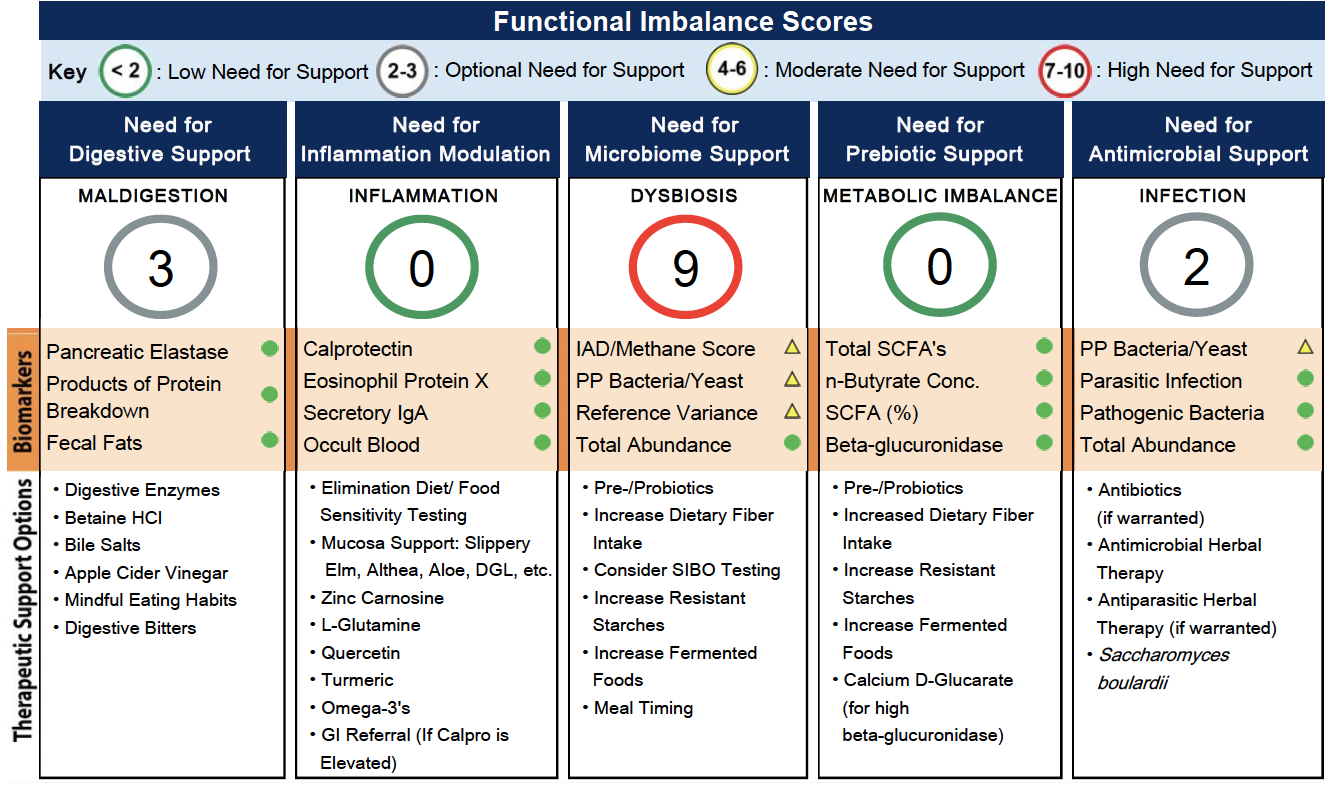
Several findings helped direct the next stage, and the pattern across them mattered more than any single marker read in isolation.
Key Findings
- Significant Microbiome Imbalance: A dysbiosis score of 9/10 alongside increased total commensal bacterial abundance is clinically relevant in the context of persistent bloating, painful gas and digestive discomfort.
- Klebsiella oxytoca: Culture identified 4+ growth, categorized by the laboratory team at Genova as a potential pathogen when present in heavy growth. This became one of the findings that shaped the later targeted phase.
- Elevated Veillonella spp.: Above the laboratory reference range at 4.5E6 CFU/g, against a reference of ≤4.1E6. Interpreted within the overall microbiome pattern and the client's symptoms rather than as an isolated result.
- Fat Digestion Required Support: Fecal triglycerides were elevated at 4.5 mg/g, while pancreatic elastase was >500 mcg/g. The strong elastase result meant that assuming poor pancreatic enzyme output would not have reflected the complete test picture — combined with her symptoms, this pointed toward broader upper digestive and biliary support.
- Low Secretory IgA: <150 mcg/mL. Because secretory IgA contributes to mucosal immune defense within the gastrointestinal tract, supporting the gastrointestinal environment and mucosal function became an important part of the program.
- Reassuring Findings: Calprotectin and eosinophil protein X were within laboratory reference ranges, pancreatic elastase was strong, total short-chain fatty acids and butyrate remained in range, and Akkermansia muciniphila was present at a good level relative to the reference.
The results within range mattered to me just as much as the abnormal ones. Knowing what was intact allowed a more targeted program, rather than approaching the results as though every aspect of gastrointestinal function required intervention.
Birute Tenkutyte, Nutritional Therapist.
Therapeutic Approach
Rather than introducing a large number of interventions at once, the program was deliberately staged, with reassessment built in between phases.
Stage One: Supporting the Gut Environment and Digestion
The initial post-test stage focused on supporting the intestinal environment, mucosal function and bowel regularity while reducing digestive burden. The client maintained three structured meals with approximately four to five hours between them. Highly fermentable foods that noticeably aggravated symptoms were temporarily reduced, while foods supporting microbial diversity were gradually incorporated according to tolerance.
Supplement support included Thera Nordic REZCUE, Saccharomyces boulardii, PHGG, Invivo Barrier.me and Biomedica UltraLiv - selected according to the client's individual test findings and nutritional therapy goals, including supporting the gastrointestinal environment, bowel function, mucosal integrity and digestion.
Review and Adjustment
At follow-up there were already encouraging changes: fewer episodes of diarrhea, reduced stool odor, improved emotional stability, and improvement in the severe loss of energy associated with bloating.
However, bloating remained persistent and could be present from the moment she woke. Poor natural hunger signaling continued, and upper digestion sometimes still felt slow. Because symptoms remained despite the initial improvements, the strategy was reassessed rather than simply continued. The possibility of small intestinal bacterial overgrowth became a greater clinical consideration at this stage, although it was not diagnosed through the stool test — a SIBO breath test assesses this directly where it is clinically indicated.
Stage Two: Targeted Microbiome Support
The next phase focused more specifically on digestive function and microbiome balance. Protein intake was increased, particularly at breakfast, and meals were kept relatively simple according to tolerance.
Betaine HCl was trialed to support upper digestive function, while additional nutritional support included omega-3 fatty acids, vitamin D3/K2, zinc, collagen and PHGG. A biofilm-support product was introduced before progressing to berberine as part of the targeted microbiome program.
The choice of berberine was also informed by the laboratory findings: the stool culture's in-vitro natural-agent assessment showed inhibition of the cultured Klebsiella oxytoca with berberine. The laboratory notes that these natural-agent findings are investigational rather than standard treatment recommendations, so this was used as one piece of information within the wider clinical picture rather than as a stand-alone treatment decision.
Current Stage: Upper Digestive and Biliary Support
Seeking Health Bile Nutrients was introduced, while magnesium and a methylated B-complex were continued. Rather than permanently avoiding foods that caused fermentation, foods such as beans were reintroduced gradually in small amounts with appropriate preparation, and dietary variety was progressively increased according to tolerance.
Client Outcomes
Bloating
Initially persistent and capable of substantially affecting her energy and comfort, bloating had reduced considerably by the latest consultation and the abdomen was no longer constantly distended. Reactions to certain highly fermentable foods, including beans and oats, still occurred, but as occasional food-specific reactions rather than a return to the original persistent pattern.
Bowel Function
Diarrhea had resolved and she was opening her bowels every day. Constipation was now uncommon, although a greater tendency toward constipation before menstruation remained.
Energy and Post-Meal Fatigue
Energy showed one of the clearest improvements, moving from significant fluctuation and profound tiredness after eating to stable energy throughout the day and waking feeling rested.
The resolution of post-meal exhaustion was a particularly meaningful outcome. At presentation, a larger meal could leave her feeling exhausted, weak and wanting to lie down; by the latest consultation she no longer associated eating with a subsequent loss of energy.
Eating Behavior and Food Tolerance
She was overeating less, had developed a more consistent meal structure and was more aware of portion size and meal timing. As symptoms improved, the strategy could begin moving away from restriction — the goal shifting to increasing dietary diversity and gradually improving tolerance to more fermentable foods, rather than maintaining a narrow diet simply to control symptoms.
Because symptoms remained despite the initial improvements, I reassessed the strategy rather than simply continuing the same program.
Birute Tenkutyte, Nutritional Therapist.
Ongoing Long-Term Plan
The improvement was significant, but the work was not considered complete simply because the major symptoms had improved. Some reduced natural hunger signaling remained, alongside intermittent bitterness in the mouth, occasional difficulty tolerating meals containing several concentrated sources of fat, and a tendency toward constipation before menstruation.
The current stage therefore shifted toward supporting upper digestive and biliary function while consolidating the progress already achieved. The objective is no longer simply reducing symptoms: it is to help the client move toward a broader, less restrictive and better-tolerated diet while maintaining the improvements already made.
Takeaways
Persistent bloating warrants assessment of digestive function as a whole. Focusing only on trigger foods would have missed the elevated fecal triglycerides, the low secretory IgA and the heavy Klebsiella oxytoca growth that together shaped the program.
Normal results carry clinical weight. Strong pancreatic elastase, in-range calprotectin, eosinophil protein X, short-chain fatty acids and butyrate, and good Akkermansia muciniphila all narrowed the field — and prevented over-intervention in areas that were functioning well.
Elevated fecal triglycerides alongside strong pancreatic elastase is a pattern worth recognizing. It argues against simple pancreatic insufficiency and directs attention toward upper digestive and biliary function instead.
Staging matters. Supporting the gut environment first, reassessing, then moving to targeted microbiome work made it possible to attribute improvements to specific changes and to adjust when bloating persisted.
Restriction is a phase, not a destination. Once symptoms stabilized, the plan deliberately reversed course toward dietary diversity and reintroduction of fermentable foods, which supports long-term microbial resilience.
Testing Used in This Case Study
Get educational resources in your inbox!
This article is for educational purposes only and is not medical advice or a substitute for professional diagnosis or treatment.