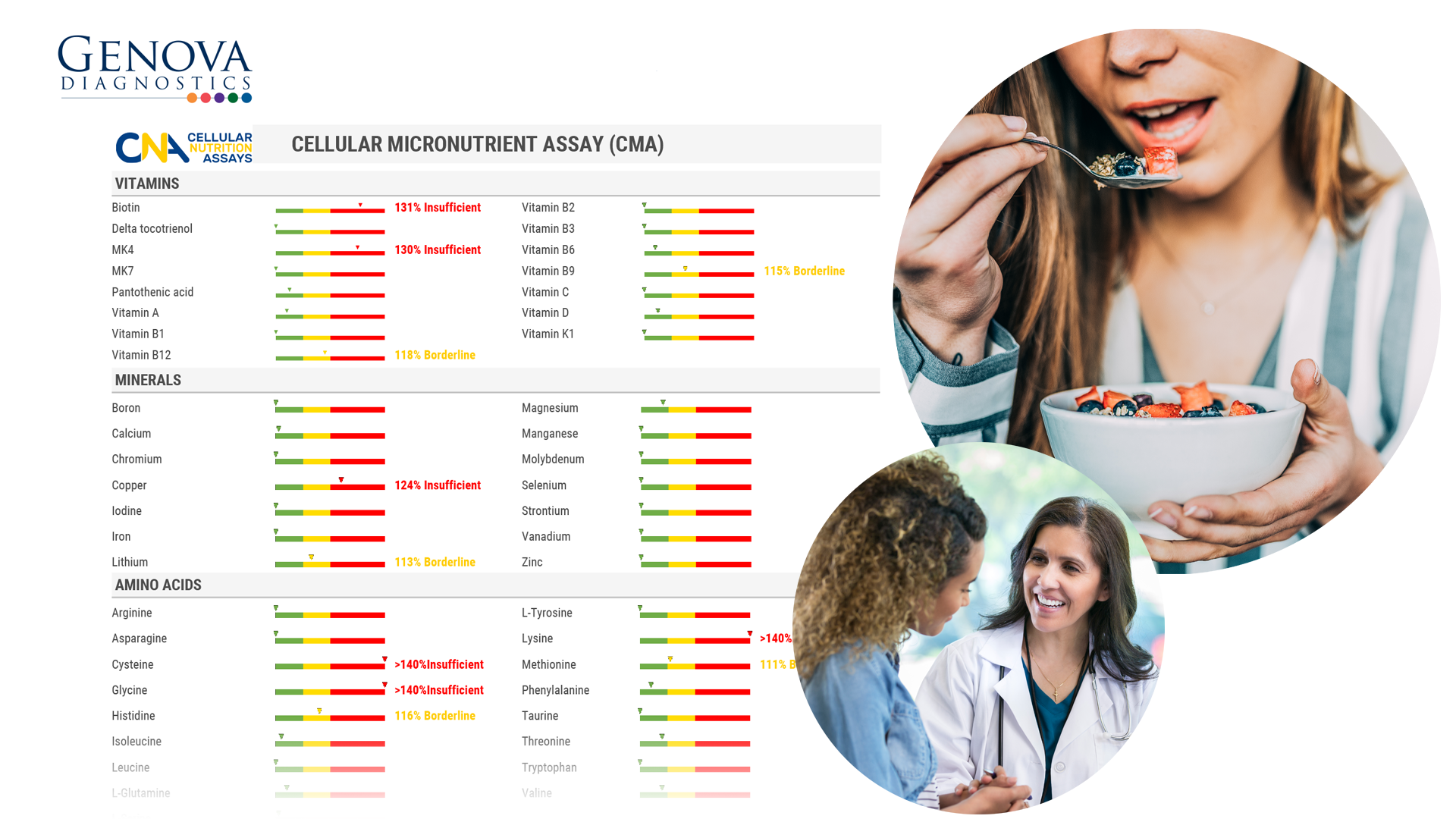
Cellular Nutrition Assays
The Cellular Nutrition Assays are a suite of three functional tests measuring cellular nutritional and antioxidant status: the Cellular Micronutrient Assay (CMA) assesses micronutrient sufficiency in immune cells; the Redox Assay measures overall antioxidant reserve capacity; the Antioxidant Protection Assay (APA) identifies which specific antioxidants protect cells from oxidative damage. All reflect long-term intracellular status - not serum snapshots.
Metabolism happens within cells. Cells need nutrients to be metabolically active.
The Cellular Micronutrient Assay (CMA) is your tool to assess and address insufficiencies in micronutrients (vitamins and minerals) as well as amino acids, and other nutrients within immune cells. This is a reflection of long-term nutrient status, not just a "snapshot" as is seen in serum nutrient tests.
55 Test Items-
55 Test Items-
Vitamins:
- Thiamine (vitamin B1), Riboflavin (vitamin B2), Biotin, Cobalamin (vitamin B12), Folate (vitamin B9), Nicotinamide (Niacin, vitamin B3), Pantothenic Acid, Pyridoxine (vitamin B6), Vitamin C, Vitamin A, Vitamin D, Vitamin E (Delta-tocotrienol) Vitamin K1, Vitamin K2-MK7, Vitamin K2-MK4
Minerals:
- Boron, Calcium, Chromium, Copper, Iodine, Iron, Lithium, Magnesium
Amino Acids:
- Arginine, Asparagine, Cysteine, Glutamine, Glycine, Histidine, Isoleucine, Leucine, Lysine, Methionine, Phenylalanine, Serine, Taurine, Threonine, Tryptophan, Tyrosine, Valine
Other Nutrients:
- Carnitine, Choline, Coenzyme Q10, Docosahexaenoic acid (DHA), Eicosapentaenoic acid (EPA), Glutathione, Inositol, Lipoic Acid, Oleic acid (omega 9)
An overload and accumulation of free radicals (from pollution, toxins, medication, radiation, etc) in the body can result in oxidative damage which plays a major role in the development of chronic and degenerative illness. Antioxidants can help protect the cells from oxidative damage.
The Redox Assay measures the overall antioxidant function of your patients' immune cells.
The Antioxidant Protection Assay (APA) identifies specific antioxidants that significantly improve your patients' antioxidant capacity and protect their cells from oxidative damage.
49 Test Items-
Botanicals, Plant Extracts, Pigments, Phytonutrients:
- Acai Berry, Andrographis, Astaxanthin, Astragalus, Bilberry, Boswellia, Camu Camu, Chlorophyll, Cinnamon, Echinacea, Elderberry, Garlic, Ginger, Gingko biloba, Goji Berry, Grape Seed, Green Tea, Lavender, Lycopene, Maitake mushroom, Mangosteen, Melatonin, Milk Thistle, Moringa, Noni Berry, Piperine, Pomegranate, Pycnogenol, Quercetin, Resveratrol, Rhodiola Root, Shiitake mushroom, Sulforaphane, Turmeric, Wild Cherry Bark, Zeaxanthin
Antioxidants and Enzymes:
- Beta-carotene, Catalase, Coenzyme Q10, Glutathione, Lipoic Acid, Lutein, NADH, Pyrroloquinoline, Selenium, Super Oxide Dismutase (SOD), Vitamin C, Vitamin E (Delta tocotrienol), Zinc
Nutrient requirements are unique to each patient
- Women's health: fertility, pregnancy, lactation, perimenopause, menopause, and others [1,2]
- High performance and/or severe stress [3]
- Sports nutrition [4]
- Pre and post -surgery [5]
- Weight management, obesity [6]
- Burnout, fatigue, depression, mood swings, low vitality [7]
- Chronic conditions, and/or metabolic syndrome (increased blood pressure and blood sugar, excess body fat, abnormal cholesterol) [8]
- Nutritional and health status optimization
Who Should Test?
- Supplement users seeking cellular efficacy proof
- Chronic fatigue/low energy with normal standard labs [9]
- Cognitive decline, brain fog, poor focus [10]
- Immune dysfunction/frequent viral illness [11]
- Athletes - performance and recovery optimization [4]
- Vegans, vegetarians, or restrictive diets [12]
- GLP-1 patients (altered nutrient absorption) [13]
- Longevity/healthy aging focus [14]
- Oxidative stress/high toxin exposure (add Redox) [15]
- Antioxidant supplement protocol optimization (add APA)