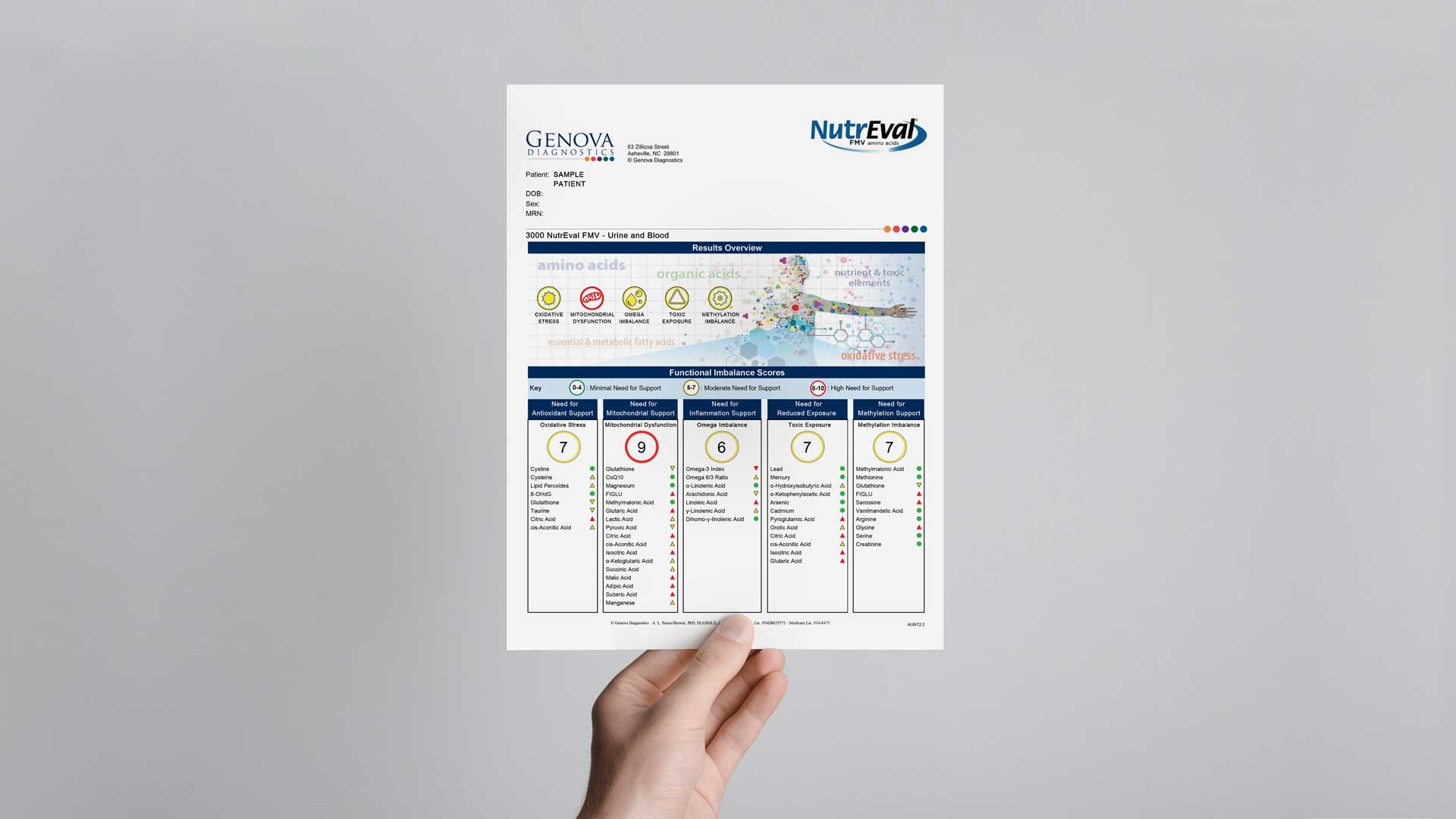
The Amino Acids Analysis, Urine is a first morning void (FMV) collection that measures 40 amino acids and intermediary metabolites. The report includes personalized amino acid recommendations based on amino acid levels, and functional vitamin and mineral cofactor recommendations based amino acid metabolism. Amino acids are important building blocks for every cell and system in the body, and require specific nutrients for metabolism and utilization.
Amino acids are single unit building blocks that form protein. They play many important roles in the body including energy generation, neurotransmitter and hormone synthesis, tissue growth and repair, immune function, blood cell formation, maintenance of muscle mass, and detoxification. Testing is important in a variety of clinical scenarios. Certain dietary and lifestyle factors or conditions may predispose a person to having amino acid imbalances. There are multiple factors that influence amino acid levels including dietary intake, liver and kidney function, protein biosynthesis and degradation, hormone imbalance, stress, exercise, and intestinal health.1
The biomarkers included in the Amino Acids Analysis are arranged as follows:
Certain analytes are measurable in blood versus urine and selection of sample type depends on the clinical concern. Urine amino acids have been shown to correlate with protein intake and with plasma concentrations.12,13 The key differences between plasma and urine amino acids are summarized below.1,9
| Plasma Amino Acids (Fasting) | Urine Amino Acids (First Morning Void) |
| Fasting sample represents "steady state" pool of amino acids; not affected by short-term diet fluctuations | Represents recent dietary intake and metabolism - more variable compared to plasma |
| 36 analytes | 40 analytes |
| Useful for mood disorders, or uncontrolled diets | Useful for controlled diets, or to assess the effects of a recent dietary change |
| Amino acid levels influenced by abnormal kidney function; preferred if patient has proteinuria | Amino acid levels influenced by abnormal kidney function; urine testing dependent on healthy kidney function (biomarkers ratioed to urine creatinine) |
| Requires a blood draw | Ideal for children or adults who do not like blood draws; urine conveniently collected at home |
The Amino Acids Analysis identifies amino acid imbalances and potential vitamin and mineral needs for healthy amino acid metabolism. Genova provides a user-friendly report with clinically actionable results including:
A first morning void collection is more convenient compared to a 24-hour collection and no important differences in mean amino acid concentrations have been reported in adults. Random urine samples can be more affected by food intake than 24-hour urine collections, with early morning, fasting specimens being the least affected.14
Amino acid testing is often ordered for infant screening or in children suspected of having an inborn error of metabolism. Genova's Amino Acid Analysis reference ranges were not designed for diagnosing these conditions. A patient with a clinical picture that is suggestive of one of these conditions warrants appropriate testing.
Urine amino acids are measured via LC/MS/MS. Reference ranges are age and gender specific and are based on a questionnaire-qualified healthy cohort. Testing is not recommended for patients under 2 years old.
Personalized recommendations for amino acids, vitamins, minerals and digestive enzymes are provided for each patient. Nutritional needs may be addressed with supplements or diet, and further analysis may be required if maldigestion or malabsorption is suspected. Comprehensive stool testing or SIBO breath testing may be appropriate to investigate the possible cause for maldigestion/malabsorption.
| Analyte List |
|---|
| 1-Methylhistidine |
| 3-Methylhistidine |
| Alanine |
| Alpha-amino-N-butyric acid |
| Alpha-aminoadipic acid |
| Anserine (dipeptide) |
| Arginine |
| Asparagine |
| Aspartic acid |
| Beta-alanine |
| Beta-aminoisobutyric acid |
| Carnosine (dipeptide) |
| Citrulline |
| Creatinine |
| Cystathionine |
| Cysteine |
| Cystine |
| Ethanolamine |
| Gamma-aminobutyric acid |
| Glutamic acid |
| Glutamine |
| Glycine |
| Histidine |
| Isoleucine |
| Leucine |
| Lysine |
| Methionine |
| Ornithine |
| Phenylalanine |
| Phosphoethanolamine |
| Phosphoserine |
| Proline |
| Sarcosine |
| Serine |
| Taurine |
| Threonine |
| Tryptophan |
| Tyrosine |
| Urea |
| Valine |
| CPT Codes | |
|---|---|
| 1-Methylhistidine | 82139 |
| Specimen Requirements |
|---|
| 15ml Aliquot of urine (First morning void-preserved with sulfosalicylic acid) |